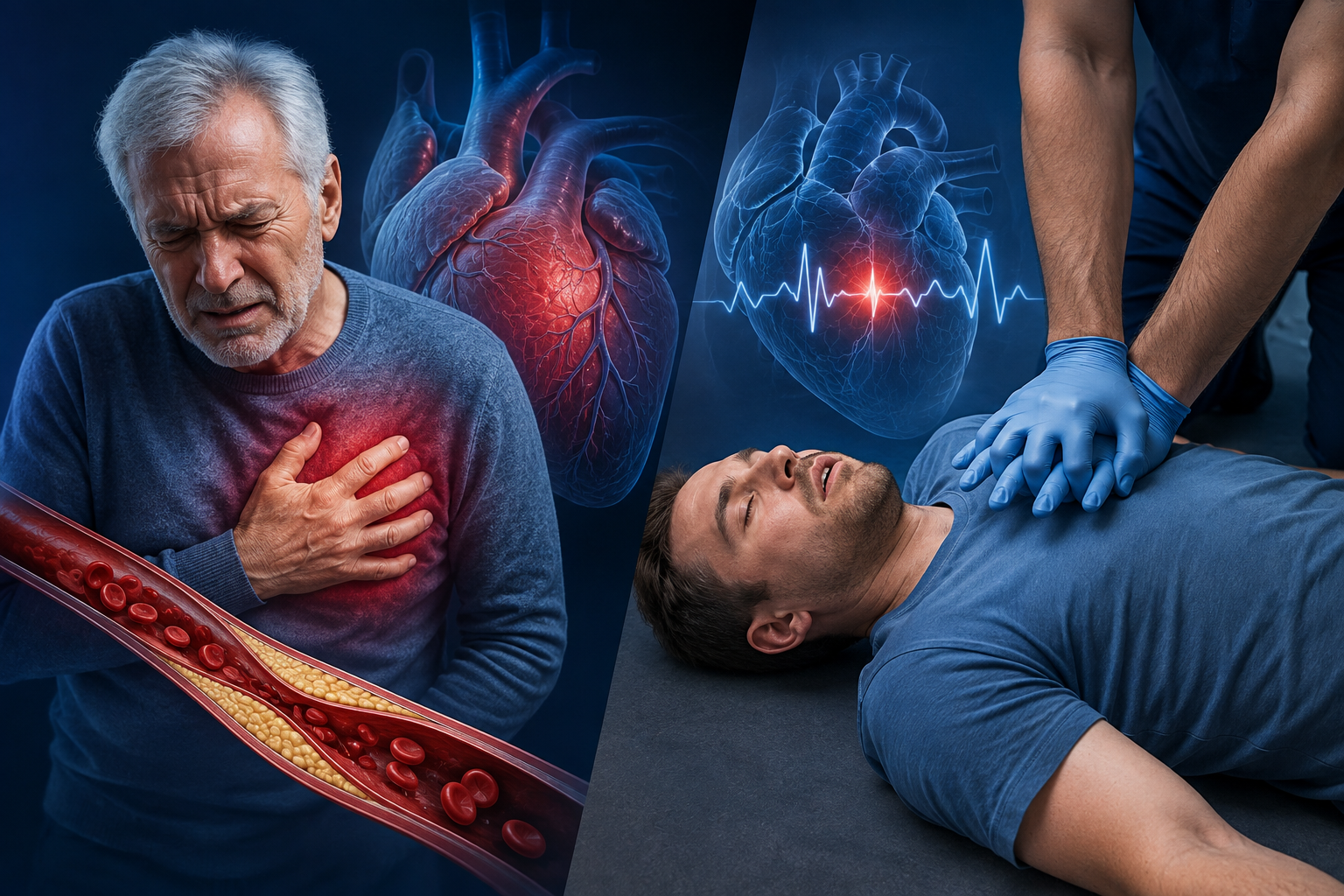
Heart attack and cardiac arrest are two terms that are often used interchangeably, but they describe different medical emergencies. The confusion is understandable because both involve the heart and can be life-threatening. The underlying problem, the symptoms, and the immediate response can be quite different.
A heart attack is primarily a blood circulation problem, while cardiac arrest is usually an electrical problem that causes the heart to stop pumping effectively. A heart attack can sometimes trigger cardiac arrest, but having a heart attack does not automatically mean that cardiac arrest will occur.
Knowing these differences can help people recognise a possible emergency and seek appropriate medical help without delay.
What Is a Heart Attack?
A heart attack, medically called a myocardial infarction, happens when blood flow to part of the heart muscle becomes blocked or severely restricted. The heart needs a continuous supply of oxygen-rich blood through the coronary arteries. When one of these arteries becomes blocked, the affected heart muscle begins to suffer from a lack of oxygen.
If blood flow isn’t restored quickly, the affected heart tissue can become damaged.
A heart attack can develop suddenly, but symptoms don’t always appear dramatically. Some people experience warning symptoms that develop gradually, while others may have significant symptoms from the beginning. The longer the artery remains blocked, the higher the risk of injury to the heart muscle.
Common Warning Signs of a Heart Attack
Symptoms can vary from one person to another. Common signs include:
- Pressure, tightness, heaviness or discomfort in the chest
- Pain or discomfort that may spread to the arm, shoulder, back, neck or jaw
- Shortness of breath
- Cold sweating
- Nausea or vomiting
- Dizziness or lightheadedness
- Unusual tiredness or weakness
Not everyone experiences the classic chest pain often shown in movies. Women, older adults, and people with diabetes may experience symptoms that are different from the usual warning signs.
If these symptoms occur unexpectedly, it is safer to treat them seriously rather than waiting for them to disappear.
What Is Cardiac Arrest?
Cardiac arrest is different from a heart attack. It happens when the heart suddenly loses its ability to pump blood effectively. This is commonly associated with an electrical disturbance that produces a dangerous abnormal heart rhythm.
When the heart can no longer pump blood normally, the brain and other vital organs stop receiving adequate circulation. The person may collapse suddenly, become unresponsive and stop breathing normally or only gasp. If treatment is not provided quickly, cardiac arrest can cause death within a few minutes.
Cardiac arrest can occur in people with known heart disease, but it can also happen unexpectedly.
Heart Attack vs Cardiac Arrest: What’s the Difference?
The easiest way to remember the distinction is:
Heart attack = circulation problem
Cardiac arrest = electrical and pumping problem
During a heart attack, a blocked coronary artery prevents blood from reaching part of the heart muscle. The heart usually continues beating.
During cardiac arrest, the heart’s electrical system malfunctions, causing the heart to stop pumping blood effectively. The person typically becomes unconscious and isn’t breathing normally.
| Heart Attack | Cardiac Arrest |
| Usually involves blocked or restricted blood flow | Usually involves a dangerous electrical rhythm |
| Part of the heart muscle may be deprived of oxygen | The heart suddenly stops pumping effectively |
| The person may remain conscious | The person usually becomes unresponsive |
| Symptoms may develop gradually or suddenly | Often occurs suddenly |
| Chest discomfort is a common symptom | Sudden collapse and abnormal or absent breathing are key signs |
| Requires urgent medical evaluation and treatment | Requires immediate CPR and defibrillation when available |
This distinction matters because the immediate response to cardiac arrest is different from the response to suspected heart attack.
Can a Heart Attack Cause Cardiac Arrest?
Yes, the two conditions can be related.
A heart attack can damage the heart and affect its electrical stability. In some cases, this can trigger a dangerous arrhythmia that leads to cardiac arrest. But most heart attacks don’t result in cardiac arrest. Cardiac arrest can also occur because of other heart conditions, including certain abnormal heart rhythms and structural heart problems.
This is why sudden cardiac arrest shouldn’t be considered simply another name for a heart attack.
What Should You Do If You Suspect a Heart Attack?
If someone develops symptoms that could indicate a heart attack, don’t wait to see whether the discomfort goes away.
Seek emergency medical assistance immediately. Even when the cause isn’t certain, getting assessed quickly is safer than delaying treatment. Emergency medical teams can begin appropriate care during transportation, and reaching medical care promptly can reduce the time before diagnosis and treatment.
Doctors may use several tests to understand what’s happening. Depending on the situation, these can include an ECG, blood tests, echocardiography and coronary imaging or angiography. The choice of tests depends on the patient’s symptoms and clinical condition.
Don’t try to diagnose the problem yourself based only on the intensity of the pain. A serious cardiac condition doesn’t always produce severe or obvious symptoms.
What Should You Do During Cardiac Arrest?
Cardiac arrest is an immediate emergency.
If someone suddenly collapses and doesn’t respond when you speak to or tap them, check whether they’re breathing normally. If the person is unresponsive and isn’t breathing normally or is only gasping:
- Call your local emergency medical service immediately.
- Start CPR as soon as possible.
- Ask someone nearby to bring an AED if one is available.
- Follow the AED’s instructions when it arrives.
- Continue CPR until professional medical help takes over.
Early CPR can help maintain blood flow to vital organs until an AED or emergency medical team can restore effective heart rhythm.
If you’re not trained in full CPR, hands-only CPR can still be an important immediate response for an adult in sudden cardiac arrest. Getting professional help quickly remains essential.
How Are Heart Conditions Evaluated?
Not every cardiac problem presents as a major emergency. Some conditions may produce warning symptoms that should be investigated before they become more serious.
Depending on the symptoms and medical history, a cardiologist may recommend tests such as an ECG, echocardiogram, cardiac monitoring, treadmill testing or blood investigations. These tests can help doctors assess heart rhythm, heart function and possible cardiovascular risk.
At NIMS Micro Hospitals, Cardiac care in Trivandrum, the cardiology department provides evaluation and management for several heart-related conditions. Its listed services include chest pain evaluation, heart attack risk assessment, ECG and cardiac monitoring, echocardiography, arrhythmia evaluation and management, heart failure management, preventive cardiology and emergency cardiac care support.
For people experiencing recurring chest discomfort, breathlessness, palpitations, dizziness or other concerning symptoms, a timely cardiac evaluation can help identify whether further investigation is needed.
When Should You Seek Cardiac Care?
Certain symptoms shouldn’t be ignored, especially when they are new, sudden or getting worse.
Seek urgent medical attention for symptoms such as:
- New or persistent chest pressure or discomfort
- Sudden difficulty breathing
- Fainting or unexplained loss of consciousness
- Severe dizziness
- Sudden weakness associated with other cardiac symptoms
- Rapid or irregular heartbeat accompanied by concerning symptoms
- Sudden collapse or unresponsiveness
If someone is unconscious and not breathing normally, don’t wait for a routine hospital appointment. Treat it as a cardiac emergency and begin the appropriate emergency response.
Recognising the Difference: Heart Attack and Cardiac Arrest
The biggest point to remember is simple: a heart attack affects blood flow to the heart, while cardiac arrest affects the heart’s ability to maintain an effective heartbeat and circulation.
A person having a heart attack may still be awake and talking. A person experiencing cardiac arrest will generally become unresponsive and won’t breathe normally.
The two conditions can be connected because a heart attack can sometimes lead to a dangerous heart rhythm and cardiac arrest. But they remain two different medical emergencies.
Understanding the difference can help you recognise warning signs, respond appropriately and avoid dangerous delays. If you notice symptoms that could indicate a heart attack, seek emergency medical care immediately. If someone collapses and isn’t breathing normally, call for emergency help, start CPR and use an AED if one is available.
If you’re looking for a cardiac care in Trivandrum for heart evaluation, diagnosis, preventive care or cardiac treatment, NIMS Micro Hospitals provides cardiology services for heart evaluation, diagnosis and treatment.