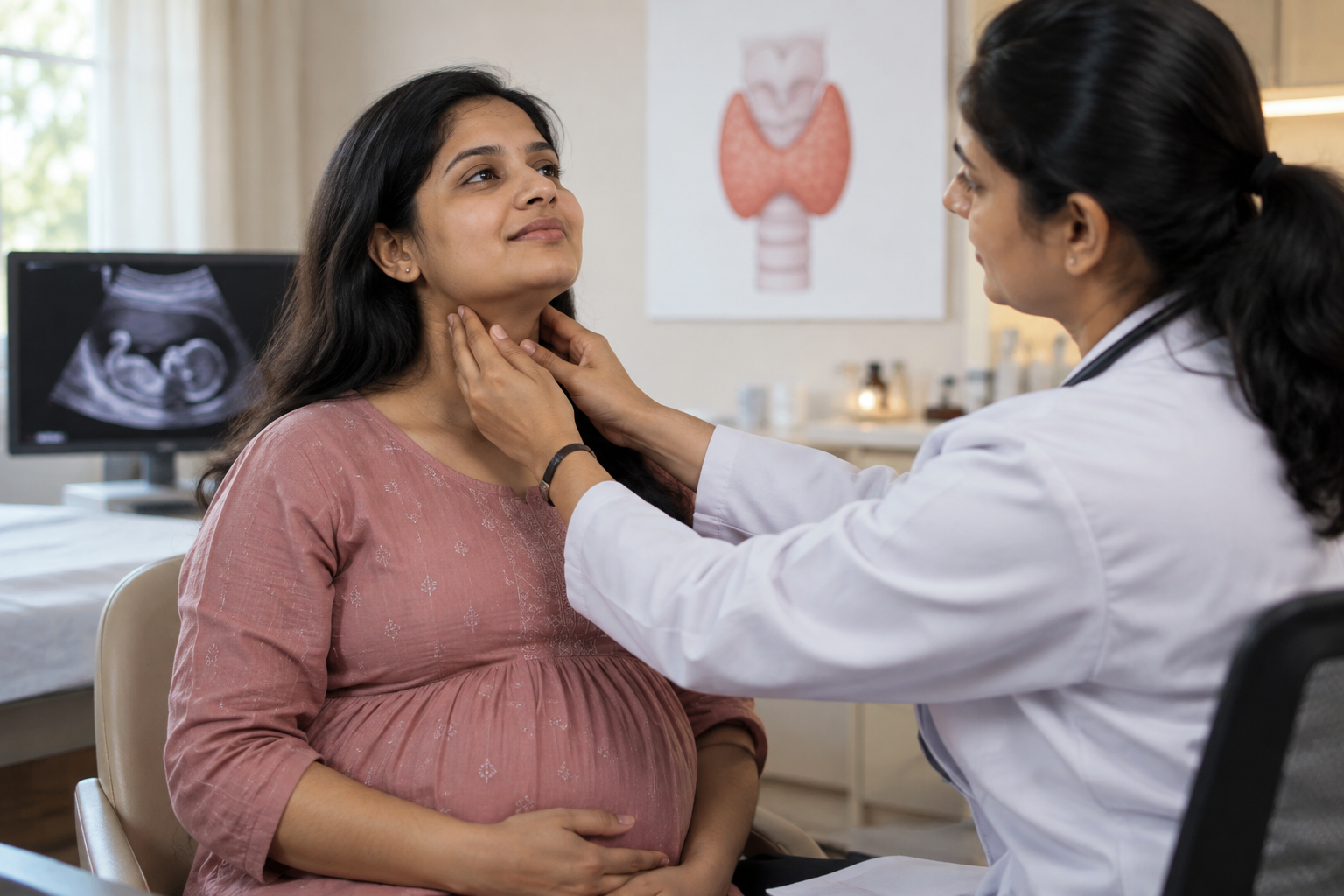
Pregnancy changes the way a woman’s body functions in many ways, and the thyroid is one of the organs that deserves attention during this period. The hormones released by the thyroid help control the body’s energy use and metabolism. They are also important for the developing baby’s brain and nervous system, especially in the early part of pregnancy.
A thyroid disorder may be something a woman has been managing before conception, or it may be detected for the first time after pregnancy begins. Finding a thyroid problem does not necessarily mean that there will be complications. With appropriate medical supervision, thyroid levels can be monitored and treatment can be adjusted when required.
If you are expecting and have questions about your thyroid health, understanding the condition and the available monitoring can help you discuss your concerns clearly with your doctor.
Why Is the Thyroid Important During Pregnancy?
The thyroid gland is located in the lower front portion of the neck and has a characteristic butterfly-like shape. It produces hormones that influence metabolism, energy consumption and several processes throughout the body.
Pregnancy places additional demands on the thyroid system. In the initial stages of pregnancy, the developing baby receives thyroid hormone from the mother because the baby’s own thyroid is not yet producing sufficient amounts independently.
As pregnancy progresses, the baby’s thyroid becomes active, but maternal thyroid hormone remains an important part of early development. Keeping thyroid function within an appropriate range is therefore an important consideration during pregnancy care.
Common Thyroid Problems During Pregnancy
The two main thyroid conditions that may occur during pregnancy are hypothyroidism and hyperthyroidism.
Hypothyroidism
A woman has hypothyroidism when her thyroid gland produces an insufficient amount of thyroid hormone. Hashimoto’s disease, which occurs when the immune system affects the thyroid, is one possible cause.
A woman with hypothyroidism may experience:
- Tiredness that feels excessive or persistent
- Increased sensitivity to cold temperatures
- Constipation
- Muscle cramps
- Trouble staying focused or concentrating
- Changes in body weight
The difficulty is that some of these complaints are also common during pregnancy itself. Feeling tired, for example, does not necessarily indicate a thyroid disorder. This is why doctors may use blood tests rather than relying only on symptoms.
Hyperthyroidism
Hyperthyroidism is essentially the opposite situation. Here, the thyroid produces more thyroid hormone than the body requires. Graves’ disease is a commonly recognised cause.
Possible symptoms include:
- A noticeably rapid or irregular heartbeat
- Trembling or shaky hands
- Feeling hotter than usual
- Weight loss without an obvious reason or less pregnancy-related weight gain than expected
- Increased tiredness
These signs can overlap with ordinary pregnancy changes too. If symptoms continue or seem unusual, medical assessment can help determine whether thyroid function should be checked.
Can Thyroid Problems Affect the Baby?
Having a thyroid disorder does not mean that a woman cannot have a healthy pregnancy. Many women with thyroid conditions deliver healthy babies when their thyroid function is appropriately managed.
The main concern arises when significant thyroid disease is left untreated or remains poorly controlled.
Severe hypothyroidism without treatment has been associated with problems such as miscarriage, preeclampsia, anemia and low birth weight. Thyroid hormones also contribute to the development of the baby’s brain and nervous system.
Severe hyperthyroidism can also create pregnancy-related risks when it is not properly managed. These may include miscarriage, premature birth, low birth weight and preeclampsia. In women with Graves’ disease, thyroid antibodies can sometimes pass through the placenta. Depending on the circumstances, this may mean that the baby’s thyroid function needs additional observation.
These potential risks explain why thyroid monitoring is taken seriously during pregnancy. They should not be a reason for unnecessary fear when the condition is being properly managed.
How Is Thyroid Disease Diagnosed During Pregnancy?
Doctors generally rely on blood investigations to assess thyroid function during pregnancy. Testing may include thyroid-stimulating hormone (TSH), thyroid hormone levels and, where relevant, thyroid antibodies.
Pregnancy itself can change thyroid hormone levels. It can also affect the way certain thyroid test results are interpreted. For this reason, the reference ranges used for pregnant women may differ from those used outside pregnancy, and trimester-specific ranges may be considered when available.
Your doctor may suggest thyroid testing if you have symptoms, have previously been diagnosed with a thyroid disorder, have a family history of thyroid disease or have another reason to be considered at higher risk.
The number of tests and the interval between them will depend on your individual history and previous results.
How Is Hypothyroidism Treated During Pregnancy?
Levothyroxine is commonly prescribed when hypothyroidism needs to be treated during pregnancy. The medicine supplies thyroid hormone that the body is not producing adequately.
If you were taking levothyroxine before becoming pregnant, your medication requirement may change after conception. Pregnancy can increase the body’s need for thyroid hormone, so your doctor may review your dose.
Thyroid blood tests are useful throughout pregnancy because they allow your healthcare provider to determine whether the current dose remains suitable.
If you discover that you are pregnant while already taking thyroid medication, contact your doctor rather than making changes to the medicine yourself. Your thyroid levels and treatment can then be reviewed appropriately.
How Is Hyperthyroidism Managed During Pregnancy?
The treatment plan for hyperthyroidism depends on why it has developed and how much the thyroid is overactive.
Some women may only require observation when the condition is mild. When medicine is needed, antithyroid drugs may be prescribed. Doctors carefully consider the dose and the stage of pregnancy when selecting treatment, with the aim of controlling the mother’s thyroid activity while reducing possible effects on the baby.
Radioactive iodine is avoided during pregnancy because it can affect the developing thyroid gland of the baby.
For this reason, anyone taking treatment for hyperthyroidism should speak with their healthcare provider before making any change to the medication.
How Often Should Thyroid Levels Be Checked?
There is no universal testing timetable for every woman with thyroid disease during pregnancy. The schedule can differ according to the type of thyroid problem, the treatment being used and the results of previous tests.
Women receiving treatment for hypothyroidism are often monitored at regular intervals. This allows the doctor to identify changes in thyroid hormone levels and adjust levothyroxine when needed. NIDDK notes that thyroid testing may be carried out every four to six weeks during the first half of pregnancy and at least once later in pregnancy for women being treated for hypothyroidism.
Your own doctor may choose a different schedule if your medical history or test results call for closer or less frequent monitoring.
What About Iodine During Pregnancy?
Iodine is required by the thyroid gland to produce thyroid hormones. During pregnancy, the body’s requirement for iodine increases.
More iodine is not necessarily better, though. Taking high amounts of iodine or adding an iodine supplement without professional advice can be inappropriate.
The amount you receive through your normal diet and prenatal supplement should be considered before taking anything extra. Discuss your iodine intake and prenatal vitamins with your doctor rather than starting a separate iodine supplement without guidance.
Can You Have a Healthy Pregnancy With Thyroid Disease?
A thyroid disorder does not rule out the possibility of a healthy pregnancy. Women with hypothyroidism or hyperthyroidism can often have good pregnancy outcomes when their condition receives appropriate care.
The important part is knowing when thyroid assessment is needed, following the recommended treatment and attending follow-up appointments.
If you already have thyroid disease and are planning to become pregnant, speaking with your doctor before conception can be useful. Your thyroid levels and current medication can be reviewed as part of pregnancy planning.
If new symptoms appear after you become pregnant, don’t automatically assume they are simply caused by pregnancy. Your doctor can decide whether thyroid testing or another evaluation would be appropriate.
Thyroid Care and Women’s Health at NIMS Micro Hospitals
Thyroid health during pregnancy may require attention alongside regular maternity care. Depending on the woman’s condition, coordination between different healthcare services may help provide appropriate assessment and follow-up.
At NIMS Micro Hospitals, the gynecology department provides maternity care, including antenatal check-ups, along with general women’s health services. The hospital also provides thyroid testing and management through its general medicine services.
For women looking for a Women’s Health Centre in Trivandrum, NIMS Micro Hospitals provides gynecological and maternity services, including antenatal care, with diagnostic facilities such as laboratory testing and ultrasound available.
Women who are concerned about thyroid function during pregnancy can discuss their symptoms, previous diagnosis, medicines and laboratory results with a qualified healthcare professional. The doctor can then decide what type of follow-up or treatment is suitable for the individual situation.
When Should You Speak to Your Doctor?
Talk to your doctor about thyroid health during pregnancy if you:
- Have had thyroid disease in the past
- Take thyroid medicine and have recently become pregnant
- Develop symptoms that could be related to abnormal thyroid activity
- Have previously been diagnosed with Graves’ disease or Hashimoto’s disease
- Have been asked to undergo thyroid monitoring during pregnancy
- Are uncertain about the meaning of a thyroid test result
Do not change the dose of thyroid medicine based only on how you feel or on a single test report. Pregnancy can influence thyroid measurements, so results need to be assessed by a healthcare professional who can consider your pregnancy, medical history and treatment together.
Final Thoughts
Thyroid function is an important part of maternal and prenatal care. Thyroid hormones support the mother’s normal body functions and also contribute to the baby’s development. Both underactive and overactive thyroid conditions can be managed during pregnancy when they are identified and followed appropriately.
If you have a thyroid condition before pregnancy or notice possible thyroid-related symptoms while expecting, speak with your doctor instead of changing treatment on your own.
Regular follow-up, appropriate testing and medication when indicated can help your healthcare team keep track of thyroid function throughout pregnancy and respond to changes when necessary.