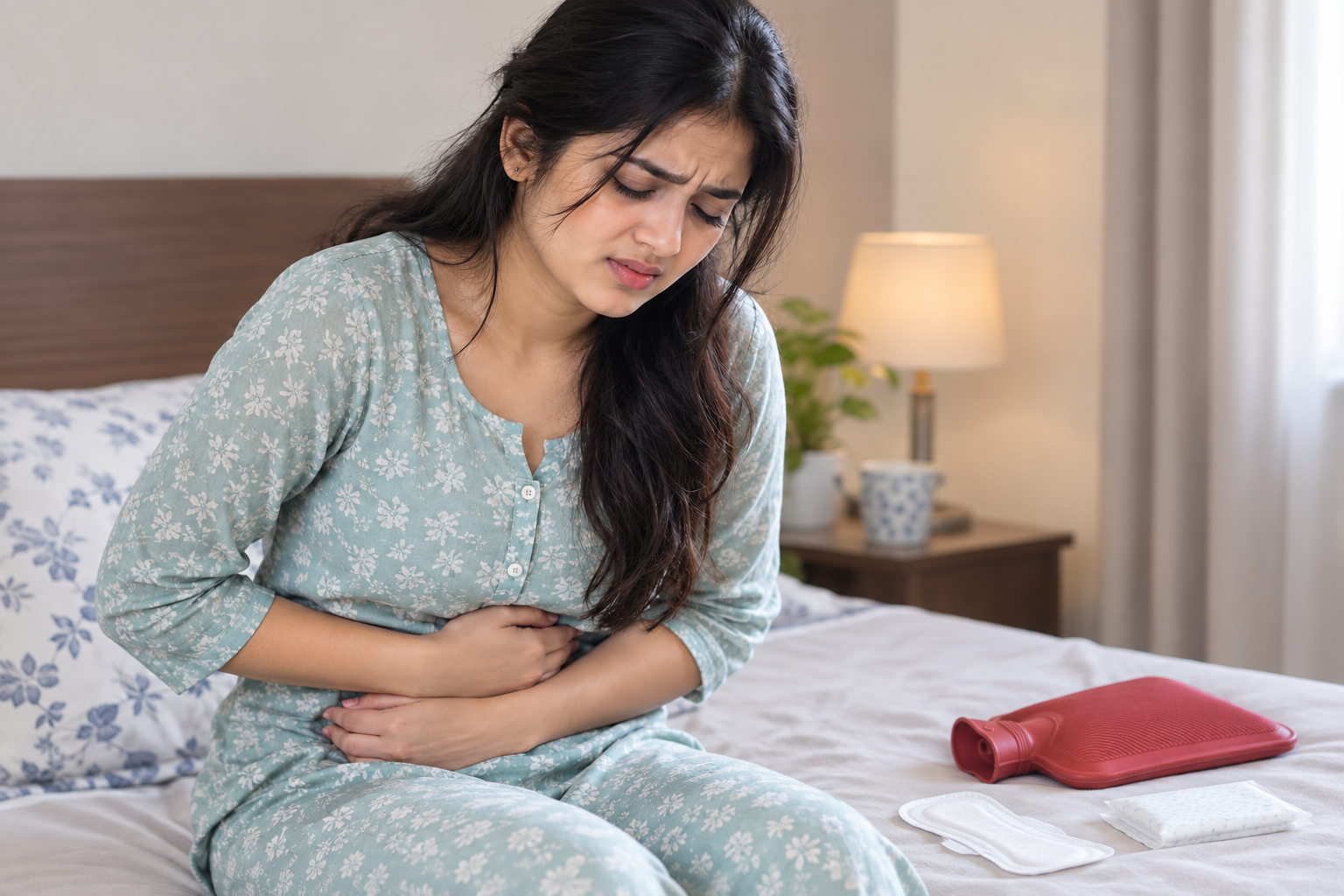
A menstrual cycle can change from time to time. A period that arrives a few days earlier or later than expected isn’t necessarily unusual. The concern starts when your periods no longer follow the pattern your body normally maintains. Long gaps, frequent bleeding, unexpected spotting or major changes in flow may indicate that something is affecting the menstrual cycle.
There isn’t one explanation for every case. Hormonal changes, PCOS, thyroid problems, pregnancy, stress, changes in nutrition or body weight, intense exercise and hormonal contraceptives can all influence menstruation. In some situations, another underlying health condition may be responsible.
Rather than trying to identify the cause from symptoms alone, it’s useful to look at the overall pattern of your periods. If the change continues, a consultation with a gynecologist can help determine whether investigation or treatment is needed.
What Does an Irregular Menstrual Cycle Mean?
Your menstrual cycle begins on the first day of bleeding and ends immediately before the next period. The length isn’t identical for every woman, and some variation between cycles can occur naturally.
For adults, cycles commonly occur within a range of approximately 21 to 35 days. The more important factor is often a noticeable departure from your own usual pattern. For example, someone who normally has predictable monthly periods may begin experiencing long gaps or bleeding at unpredictable intervals.
Irregularity can involve more than the date of menstruation. You may notice that bleeding lasts longer than usual, becomes unusually heavy or light, or is accompanied by spotting between periods.
One unexpected cycle isn’t enough to establish that a health problem exists. A recurring pattern is more useful when deciding whether professional advice is appropriate.
Why Can Your Period Become Irregular?
Menstruation depends on communication between hormones, the ovaries and the reproductive system. Ovulation is an important part of this process. When hormonal activity or ovulation is disrupted, the timing of menstrual bleeding can change.
Hormonal Changes During Different Life Stages
Hormone levels naturally shift throughout a woman’s life. These changes can affect ovulation and alter the timing of periods.
Puberty is one stage when cycles may take time to become established. A similar change can occur during perimenopause, when reproductive hormone levels become less predictable as menopause approaches.
PCOS
Polycystic ovary syndrome, or PCOS, is another common reason for irregular menstruation. The condition can interfere with normal ovulation, resulting in periods that are widely spaced or unpredictable.
PCOS doesn’t affect every woman in the same way. Possible symptoms include acne, increased hair growth on the face or body, scalp hair thinning, weight changes and difficulty conceiving.
Having irregular periods doesn’t by itself confirm PCOS. A medical assessment is needed to determine whether the condition is present.
Thyroid-Related Problems
The thyroid produces hormones that affect many functions in the body, including menstrual activity.
When thyroid hormone levels are too low or too high, the menstrual cycle can be affected. Some women may experience heavier bleeding, while others may notice lighter or irregular periods. In some cases, menstruation may stop temporarily.
Prolonged Stress
Periods can be affected during times of sustained stress. Significant emotional strain may interfere with the hormonal processes involved in ovulation.
This can result in a period arriving later than expected or a cycle being missed. If stress remains high for an extended period, menstrual irregularity may continue.
Changes in Weight and Food Intake
The reproductive system is sensitive to major changes in energy availability. Losing or gaining a substantial amount of weight can affect hormone activity and ovulation.
Not eating enough can also contribute to menstrual changes. This may occur when someone has inadequate nutritional intake or an eating disorder.
Very Intensive Exercise
Heavy training without enough nutritional support can sometimes affect menstruation. This is more likely when a demanding exercise routine is accompanied by weight loss or insufficient calorie intake.
The body needs adequate energy for reproductive functions. When energy availability becomes too low, the hormonal processes associated with menstruation may be disrupted.
Pregnancy
A missed period can have a simple explanation: pregnancy.
If pregnancy is possible, taking a pregnancy test can help clarify why menstruation hasn’t occurred. A doctor may also recommend pregnancy testing when evaluating an unexpectedly absent period.
Hormonal Contraception
Some contraceptive methods deliberately alter hormonal activity, so changes in bleeding are possible.
Depending on the method, you might experience lighter periods, occasional spotting or no menstrual bleeding. Other medications and medical conditions can also change menstrual patterns, so ongoing irregularity should be assessed in context.
What Changes Can Occur With Irregular Periods?
The main change is usually a difference in when your period occurs. Other symptoms may appear depending on the underlying reason.
You might notice:
- Periods coming earlier or later than expected
- Several weeks or months between periods
- Bleeding that lasts longer than your usual duration
- A noticeable increase or decrease in menstrual flow
- Spotting outside your expected period
- Pelvic pain or discomfort
- Frequent acne
- Increased facial or body hair
- Changes in weight
- Hair becoming thinner on the scalp
- Difficulty getting pregnant
These signs aren’t specific to one condition. For this reason, they shouldn’t be used alone to determine what’s causing the menstrual change.
When Should You Talk to a Gynecologist?
It’s a good idea to seek medical advice when your menstrual pattern has changed and doesn’t return to normal.
You should consider an appointment if:
- Your previously regular periods have become unpredictable
- You repeatedly miss periods
- Your cycles remain unusually short or lengthy
- You bleed between periods
- Your period continues significantly longer than it normally does
- Your menstrual flow becomes exceptionally heavy
- Irregular periods occur together with acne, excess facial hair or weight changes
- Pelvic pain continues
- You have been trying to conceive without success
Repeatedly missing periods also deserves attention when pregnancy has been ruled out, since other hormonal or reproductive issues may need to be investigated.
How Is the Cause Identified?
Irregular periods can have several possible causes, so doctors don’t rely on a single test in every case.
Your consultation will usually begin with questions about your menstrual history. The doctor may want to know how frequently you get your period, how long bleeding lasts, whether the flow has changed and whether you have noticed other symptoms.
Your medications, existing health conditions, lifestyle and plans for pregnancy may also be relevant.
Depending on what the doctor finds, some investigations may be recommended.
Blood Investigations
Blood tests can provide information about hormone levels and may help investigate certain causes of menstrual irregularity. Thyroid testing may be included when a thyroid problem is suspected.
Pregnancy Testing
When conception is possible, pregnancy testing can help determine whether pregnancy explains a delayed or absent period.
Pelvic Ultrasound
Ultrasound can be used to examine the uterus and ovaries. It may help doctors investigate possible reproductive causes, including ovarian cysts, fibroids or findings associated with PCOS.
Tracking Your Menstrual History
Your own records can provide useful information. Write down the first day of each period, how long it lasts, noticeable changes in flow and any symptoms you experience.
A record over several cycles can help a doctor understand whether the change is occasional or part of a continuing pattern.
Not everyone needs every investigation. The appropriate tests depend on the individual’s symptoms and medical history.
How Are Irregular Periods Managed?
There isn’t one treatment that works for every case. Management depends on what’s causing the menstrual changes.
When factors such as inadequate nutrition, stress, excessive exercise or major weight changes are involved, the doctor may recommend appropriate lifestyle adjustments.
If an underlying condition is found, treating that condition may be part of the solution. For example, thyroid disorders can require medication. PCOS management may involve lifestyle measures and medicines, depending on the symptoms and whether pregnancy is desired.
Hormonal medicines or certain contraceptive options may also be considered to manage menstrual bleeding in suitable patients. These treatments should be selected by a healthcare professional after considering the woman’s health and reproductive plans.
Women trying to become pregnant may require a different approach. If irregular periods are related to inconsistent ovulation, the doctor may recommend additional assessment and fertility-related treatment when appropriate.
Does Having Irregular Periods Make Pregnancy Difficult?
An irregular cycle doesn’t automatically mean that pregnancy is impossible.
The important question is whether ovulation is occurring consistently. If ovulation happens irregularly or doesn’t occur, identifying the fertile period can become more difficult and conception may take longer.
PCOS is one condition that can interfere with regular ovulation. Some women with PCOS may consequently experience fertility difficulties.
If you’re planning a pregnancy and your periods remain unpredictable, a gynecologist can evaluate the situation and determine whether ovulation or fertility testing would be useful.
Can Irregular Periods Be Avoided?
There is no way to prevent every cause of irregular menstruation. Some menstrual changes are connected with natural stages such as puberty or the transition toward menopause. Others are related to medical conditions that require treatment.
Healthy habits can still support normal reproductive function. Adequate nutrition, appropriate physical activity, attention to prolonged stress and timely treatment of existing health problems can all be helpful.
Cycle tracking is also worth making a habit. Instead of relying on memory, record your period dates and any noticeable changes. This information can make a future medical consultation more informative.
Gynecological Treatment in Trivandrum at NIMS Micro Hospitals
Women experiencing repeated menstrual changes may benefit from an assessment by a gynecologist, particularly when the reason isn’t clear.
NIMS Micro Hospitals provides Gynecological Treatment in Trivandrum for a range of women’s health concerns. Services include care related to menstrual disorders, PCOS/PCOD, fibroids, ovarian cysts and pelvic conditions.
The gynecology department also provides fertility evaluation, ovulation monitoring, maternity care and support for menopause-related concerns.
When required for assessment, ultrasound examinations and laboratory investigations are available. The department includes gynecologists such as Dr. Susan Koshy and Dr. Rasna Kishore.
For women experiencing irregular menstruation, identifying the underlying reason is an important part of deciding what to do next. During a consultation, the gynecologist can review the menstrual pattern, associated symptoms and relevant health information before deciding whether further investigations or treatment are appropriate.
Final Thoughts
Periods don’t always arrive on exactly the same day, and an occasional variation can happen without indicating a serious problem. A continuing change in your normal cycle is different and deserves attention.
PCOS, thyroid disorders, pregnancy, hormonal contraception, stress, significant changes in weight or nutrition and intense exercise can all be associated with menstrual irregularity.
Since the same symptoms can occur for different reasons, trying to diagnose the problem yourself can be misleading. A medical evaluation can help establish what may be affecting your cycle and whether treatment is necessary.
If irregular periods continue or occur alongside unusual bleeding, persistent pelvic pain, other hormonal symptoms or difficulty conceiving, speaking with a gynecologist is a sensible next step.