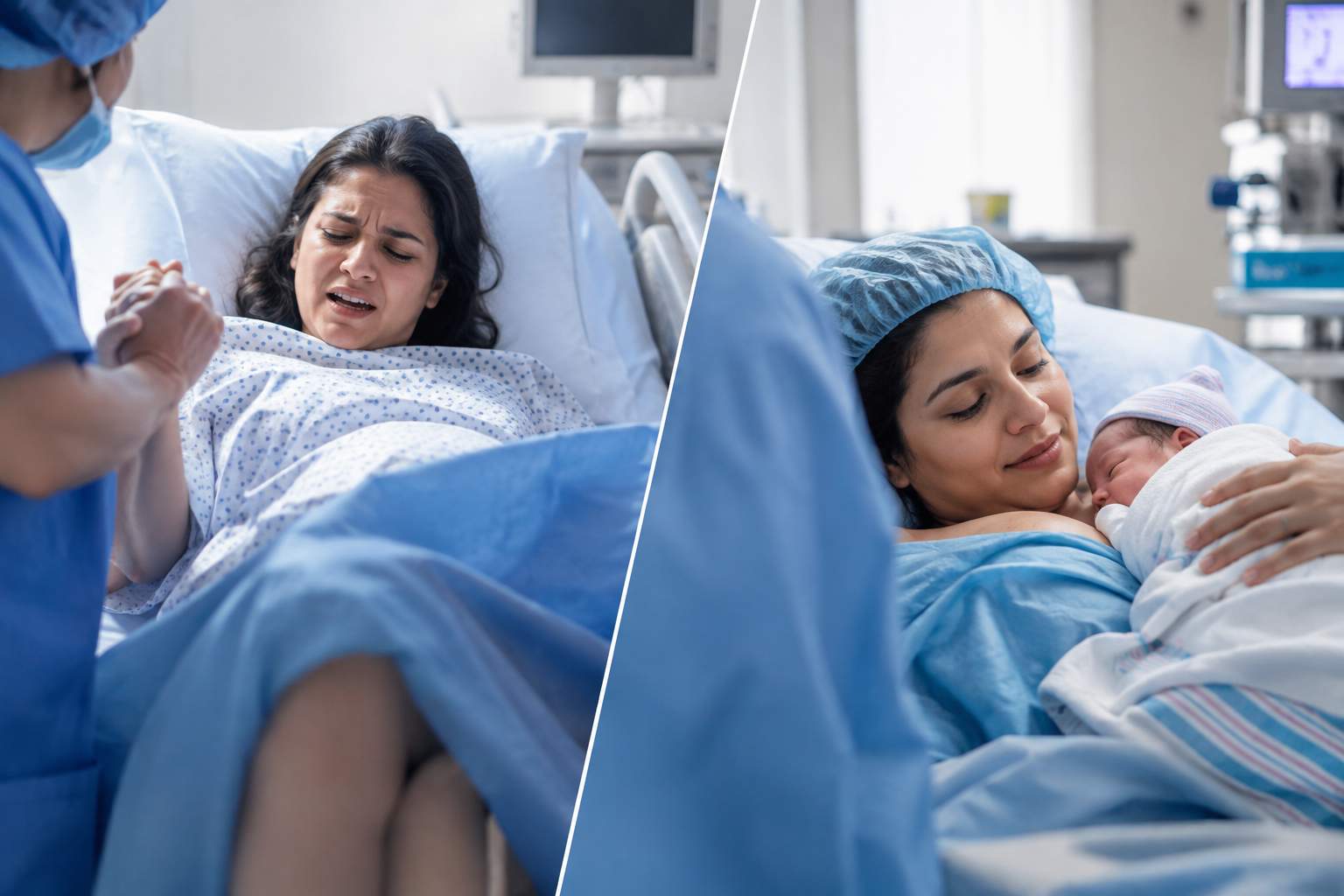
Pregnancy often comes with many questions, and one of the most common is how the baby will be delivered. Some women hope for a vaginal delivery, while others may need or plan a Caesarean section, commonly called a C-section. In some pregnancies, the preferred plan may also change during labour if the health of the mother or baby requires it.
It is important to remember that there is no single delivery method that is right for every pregnancy. The safest option depends on factors such as the mother’s health, the baby’s position, the progress of labour, previous pregnancies and any complications that develop during pregnancy or delivery. The World Health Organization states that Caesarean sections can be lifesaving when medically necessary, but they also carry risks because they are major surgery.
Understanding the differences between vaginal delivery and C-section can help expecting mothers have more informed conversations with their obstetrician.
What Is a Vaginal Delivery?
A vaginal delivery, sometimes casually called a “normal delivery,” is when the baby is born through the birth canal.
Labour usually involves contractions that help the cervix open and allow the baby to move through the birth canal. Depending on the pregnancy and medical circumstances, labour may begin naturally or may be medically induced.
Vaginal delivery can sometimes involve assistance using instruments such as forceps or a vacuum if the baby needs help being delivered. Even when an assisted vaginal birth is needed, it is still different from a Caesarean because it does not involve abdominal surgery.
What Is a C-Section?
A Caesarean section is a surgical procedure in which the baby is delivered through an incision made in the mother’s abdomen and uterus.
A C-section may be planned before labour or may become necessary during labour if a situation develops that makes vaginal delivery unsafe or difficult.
Some situations where a C-section may be recommended include:
- The baby is in a position that makes vaginal delivery difficult or unsafe
- Labour is not progressing as expected
- There are concerns about the baby’s heart rate
- Certain problems involving the placenta
- Some maternal health conditions
- Certain complications involving the baby or pregnancy
The exact reason for recommending a C-section varies from one pregnancy to another. ACOG notes that an unplanned C-section may become necessary when labour does not progress or when the baby’s heart rate indicates possible distress.
Benefits of Vaginal Delivery
When vaginal delivery is medically appropriate, it has some advantages related to recovery and avoiding major abdominal surgery.
Shorter Recovery in Many Cases
Recovery after a vaginal delivery is generally shorter than recovery after a C-section, although the experience varies depending on whether there were complications, tearing, assisted delivery or other factors.
No Abdominal Surgical Incision
A vaginal birth does not require an abdominal incision. This means there is no C-section surgical wound to heal.
Shorter Hospital Stay May Be Possible
When there are no complications, women who have a vaginal birth may be able to leave the hospital sooner than women recovering from a C-section.
Easier Early Mobility
Without abdominal surgery, some women may find it easier to move around during the early postpartum period. However, vaginal birth can still involve pain, swelling, stitches or pelvic discomfort, especially if there is a tear or an assisted delivery.
Risks and Challenges of Vaginal Delivery
Vaginal birth is not completely free of risks.
Some women may experience:
- Perineal tears
- Vaginal or perineal soreness
- Swelling and discomfort
- Heavy bleeding in some cases
- Infection in certain circumstances
- Pelvic floor-related symptoms
- The need for assisted delivery
An assisted vaginal delivery using forceps or vacuum can increase the risk of injury to the vaginal, perineal or anal tissues.
Sometimes, labour may not progress as expected or concerns about the baby’s condition may develop. In such circumstances, the medical team may recommend a C-section.
Benefits of a C-Section
A C-section can be an important and sometimes lifesaving procedure when vaginal delivery presents a significant risk to the mother or baby.
For example, it may be recommended when labour is obstructed or prolonged, the baby’s position creates a problem, or there are concerning changes in the baby’s condition.
One practical benefit is that a planned C-section can provide a scheduled approach when there is a clear medical reason for avoiding labour.
It can also prevent some complications that could occur if a woman with a specific pregnancy complication continued with an attempted vaginal delivery.
Risks of a C-Section
Although C-sections are commonly performed and are generally safe when appropriate medical and surgical care is available, they are still major surgery.
Possible complications include:
- Infection
- Heavy bleeding
- Blood clots
- Reactions to anaesthesia
- Injury to nearby organs such as the bladder or bowel
- Pain around the incision
- A longer recovery period
ACOG also notes that Caesarean delivery can affect some future pregnancies. Certain placenta-related problems and other complications become more relevant as the number of previous C-sections increases.
This is one reason doctors consider both the current pregnancy and future reproductive plans when discussing delivery options.
Normal Delivery vs C-Section: Recovery Time
Recovery can be very different from one woman to another, so there is no fixed number of days that applies to everyone.
Recovery After Vaginal Delivery
Many women can begin moving around relatively soon after a vaginal birth. However, recovery still depends on what happened during labour.
For example, someone who experienced a significant tear or required an assisted delivery may need more time to recover from soreness and discomfort.
Postpartum bleeding and cramping can also occur after vaginal birth and should be discussed with the healthcare team if they become heavy, severe or unusual.
Recovery After C-Section
A C-section involves an abdominal incision, so the body needs time to heal from surgery.
ACOG states that the abdominal incision may remain sore during the first few days and that it can take several weeks for the abdomen to heal. Hospital stay after a C-section is often longer than after a vaginal delivery, although the exact duration varies by individual circumstances and hospital practice.
During recovery, mothers may need to limit strenuous activities and take extra care of the incision. Gentle movement is generally encouraged as part of recovery, according to medical advice.
Which Delivery Method Is Safer?
This is one of the most important points for expecting mothers.
It is not accurate to say that vaginal delivery is always safer or that a C-section is always safer.
When there is no medical reason for a C-section, vaginal delivery may be an appropriate option. However, when complications make vaginal delivery risky, a C-section may provide the safer route for the mother, the baby or both.
WHO recommends that Caesarean delivery be performed when medically necessary rather than using a fixed target rate.
The decision should therefore be based on the individual pregnancy rather than comparing delivery methods in isolation.
Can a Planned Vaginal Delivery Become a C-Section?
Yes.
A woman may begin pregnancy planning for a vaginal delivery, but circumstances can change during labour.
For example, labour may stop progressing, or the baby’s heart rate may show concerning changes. In such situations, the obstetric team may recommend an unplanned C-section.
This does not mean that the original birth plan failed. The medical team may simply need to adjust the plan according to what is safest at that moment.
What About Future Pregnancies?
The type of delivery can also be relevant when planning future pregnancies.
After a C-section, some women may be candidates for vaginal birth after Caesarean, known as VBAC. Whether VBAC is appropriate depends on factors such as the previous uterine incision, the reason for the earlier C-section and the circumstances of the current pregnancy.
A previous C-section does not automatically mean that every future birth must be another C-section. However, the decision should be made with an obstetrician who can assess the individual risks and available maternity care.
How Can You Prepare for Your Delivery?
While you cannot always control how labour progresses, you can prepare yourself by understanding what to expect.
A few useful steps include:
- Attend regular antenatal appointments
- Discuss your medical history with your obstetrician
- Understand your baby’s position and pregnancy progress
- Ask about pain-relief options
- Discuss your preferred birth plan
- Learn when you should go to the hospital
- Understand possible reasons a C-section could become necessary
- Follow your doctor’s advice about nutrition, activity and medications
- Ask questions if you do not understand a recommended procedure
Having a birth preference is completely reasonable, but it is also helpful to remain open to changes if medical circumstances require them.
Maternity Care at NIMS Micro Hospitals
For women looking for Gynecological Treatment in Trivandrum, NIMS Micro Hospitals provides gynecological and maternity care, including antenatal check-ups, normal delivery, C-section and postnatal care. The hospital’s gynecology department also provides breastfeeding support and fertility-related services.
The maternity team can assess each pregnancy based on the mother’s health, pregnancy progress and other relevant factors. Delivery planning can then be discussed with the treating doctor, including the possibility of vaginal delivery or C-section when medically appropriate.
NIMS Micro Hospitals also provides diagnostic support such as ultrasound and laboratory services as part of its women’s healthcare services.
When Should You Speak to Your Doctor?
During pregnancy, contact your maternity care team if you experience symptoms or changes that concern you.
Seek urgent medical attention for symptoms such as:
- Heavy vaginal bleeding
- Severe or persistent abdominal pain
- Severe headache or vision changes
- Reduced or unusual fetal movement
- Leakage of fluid
- Regular painful contractions before your expected time
- Difficulty breathing or chest pain
- Sudden swelling with other concerning symptoms
The appropriate response depends on the stage of pregnancy and your individual medical situation, so urgent symptoms should not be managed through online information alone.
Final Thoughts
Vaginal delivery and C-section are different methods of childbirth, and both can involve benefits, risks and recovery considerations.
A vaginal birth generally avoids abdominal surgery and is often associated with a shorter recovery. A C-section, on the other hand, is a surgical procedure that can be essential when vaginal delivery may put the mother or baby at risk.
The goal should not be to choose a delivery method based simply on which one sounds easier. The safest approach is to discuss your pregnancy, medical history, preferences and any possible complications with your obstetrician.
Most importantly, a birth plan can provide guidance, but it may need to change as pregnancy or labour progresses. What matters is receiving appropriate care for both mother and baby throughout pregnancy, delivery and recovery.