Urinary incontinence refers to the accidental leakage of urine when a person is unable to control their bladder properly. It can happen during everyday activities, following a sudden urge to urinate or even without any noticeable warning. Although it is more common with increasing age, bladder control problems can affect adults of different age groups.
For many people, urine leakage can interfere with work, travel, exercise and social activities. Some may avoid going outdoors because they are worried about finding a toilet in time. Others may feel uncomfortable discussing the problem, even when it begins to affect their daily routine.
Urinary incontinence is not something people simply have to accept as they grow older. Understanding its causes and identifying the type of leakage can help doctors recommend suitable treatment.
What Causes Urinary Incontinence?
The bladder stores urine until the body is ready to release it. Muscles around the bladder and urethra help regulate this process, while nerves carry signals between the bladder and brain. If these muscles become weak, the bladder contracts unexpectedly or nerve communication is disrupted, urine leakage may occur.
Several factors can contribute to bladder control problems, including:
- Weak pelvic floor muscles
- Changes in bladder muscle activity
- Urinary tract infections
- Enlarged prostate
- Pregnancy and childbirth
- Diabetes and nerve-related conditions
- Excess body weight
- Long-term constipation
- Certain medications
- Previous pelvic or prostate surgeries
The underlying reason can vary between individuals. Some people experience temporary leakage due to an infection or medication, while others develop symptoms because of changes in bladder function or the urinary system.
Common Types of Urinary Incontinence
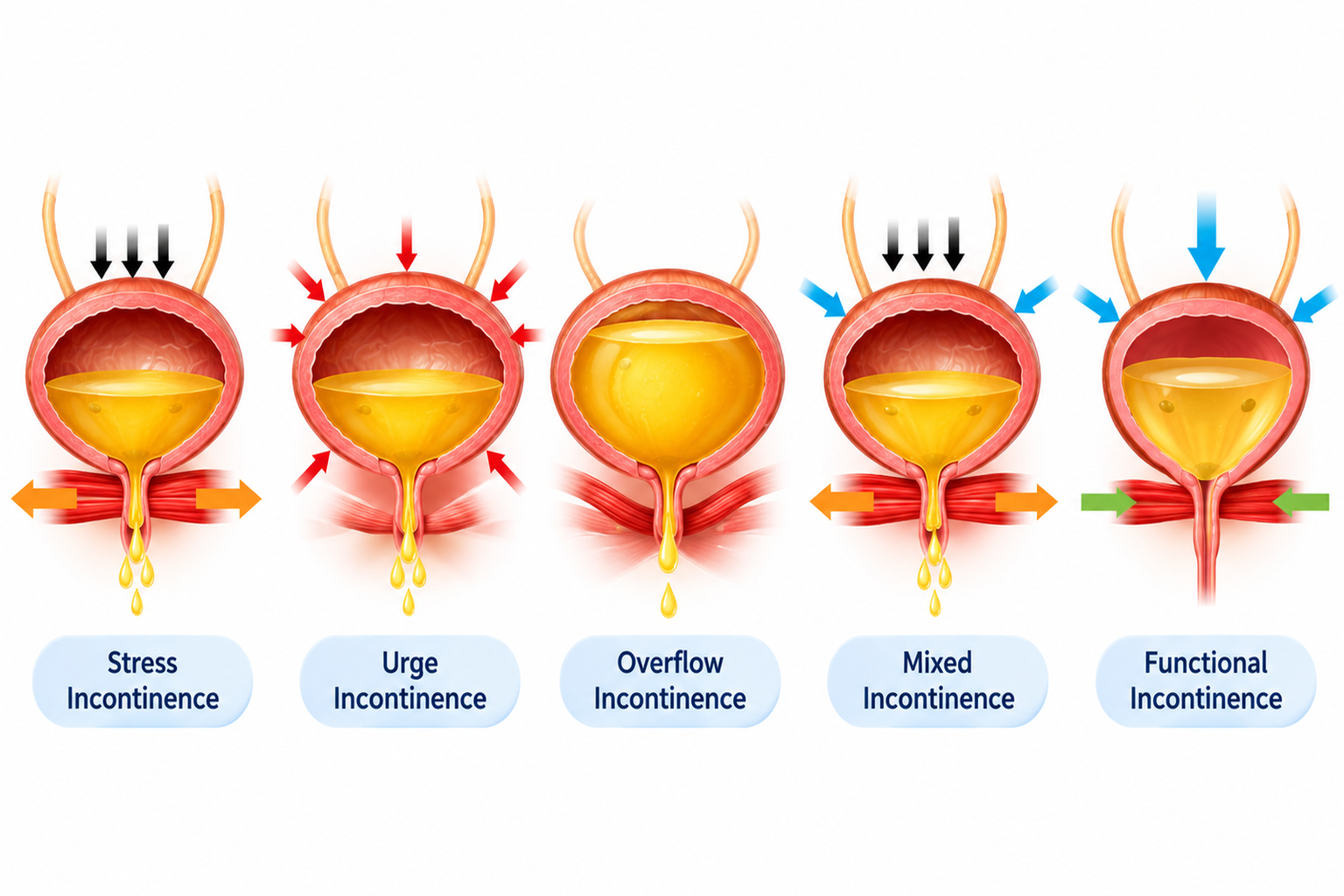
Urinary incontinence is classified according to when urine leakage occurs and what happens inside the bladder. Identifying the pattern helps determine which treatment may be appropriate.
1. Stress Urinary Incontinence
In this type of incontinence, small amounts of urine may leak when the body experiences physical strain. Common triggers include coughing, sneezing, laughing, exercising or carrying heavy loads.
This type is commonly associated with weakened pelvic floor muscles or reduced support around the urethra. It is frequently seen in women following pregnancy and vaginal childbirth. Men may also experience it, particularly after prostate surgery.
2. Urge Urinary Incontinence
This type involves a sudden and difficult-to-control need to urinate, followed by leakage before reaching the toilet. This sudden need to urinate can occur even when only a small amount of urine has collected in the bladder.
It is often associated with overactive bladder, a condition in which the bladder muscle contracts at inappropriate times. Some people also experience frequent urination during the day and repeated interruptions to their sleep.
3. Overflow Incontinence
Overflow incontinence develops when the bladder does not empty properly. Urine remains inside after urination, and the increasing amount can eventually escape in small quantities.
People may notice frequent dribbling, a weak urine stream, difficulty starting urination or a feeling that the bladder is still full after using the toilet. An enlarged prostate is one possible cause in men. Other reasons include urinary tract obstruction and problems affecting the nerves or bladder muscles.
4. Mixed Urinary Incontinence
Mixed incontinence involves symptoms of both stress and urge incontinence. A person may experience leakage while coughing or exercising and also have sudden urges that are difficult to control.
This combination can make bladder control challenging because more than one mechanism may be involved. Treatment is usually planned according to the symptoms that cause the greatest difficulty.
5. Functional Incontinence
Functional incontinence occurs when a person cannot reach or use the toilet in time, even though their bladder may function normally. Limited mobility, physical disabilities, memory difficulties or certain neurological conditions can contribute to this problem.
For example, someone with joint problems may find it difficult to move quickly enough to reach the bathroom when the urge to urinate develops.
Urinary Incontinence in Women: Common Causes
Women may experience bladder control problems at different stages of life. Pregnancy and childbirth can place pressure on the pelvic floor, sometimes affecting the muscles and tissues responsible for supporting the bladder and controlling urine flow.
Hormonal changes during menopause may also contribute to urinary symptoms by affecting the tissues surrounding the urethra and bladder. Other possible causes include:
- Weakening of pelvic floor muscles
- Previous pelvic surgeries
- Pelvic organ prolapse
- Repeated urinary tract infections
- Excess body weight
- Nerve-related conditions
Some women experience leakage only during physical activities, while others have frequent urges or a combination of symptoms. A proper assessment is important because the treatment depends on the underlying cause.
Urinary Incontinence in Men: Common Causes
In men, prostate-related conditions are an important factor to consider when investigating urinary leakage. The prostate gland surrounds part of the urethra, and enlargement can narrow the passage through which urine leaves the bladder.
This may interfere with normal bladder emptying and contribute to overflow incontinence. Other possible causes include:
- Benign prostate enlargement
- Previous prostate surgery
- Treatment for prostate cancer
- Bladder muscle dysfunction
- Diabetes-related nerve damage
- Neurological disorders
- Urinary tract obstruction
Men who notice leakage along with difficulty starting urination, a weak stream or frequent nighttime urination should seek medical evaluation. These symptoms may indicate an underlying urinary or prostate condition.
How Is Urinary Incontinence Diagnosed?
A diagnosis begins with understanding the person’s symptoms and medical history. A doctor may ask when leakage occurs, how frequently it happens, whether there is a sudden urge to urinate and whether the person experiences difficulty emptying the bladder.
Depending on the symptoms, the evaluation may involve:
Physical examination: An examination may help identify pelvic floor weakness, prostate enlargement or other physical changes that could contribute to leakage.
Urine testing: A urine sample may be examined for signs of infection, blood or other abnormalities.
Bladder diary: Recording fluid intake, bathroom visits, urine leakage and episodes of urgency over several days can help identify patterns.
Ultrasound assessment: Imaging may be used to examine the urinary system and measure the amount of urine remaining in the bladder after urination.
Urodynamic testing: These tests assess how the bladder stores and releases urine. They may be recommended when the cause of the symptoms is unclear or further assessment is required.
Not everyone needs every test. The doctor selects investigations based on the person’s symptoms and examination findings.
Treatment Options for Urinary Incontinence
Treatment depends on the type of incontinence, its severity and the condition responsible for the leakage. Many people can manage their symptoms through non-surgical approaches, while others may need medication or a procedure.
1. Pelvic Floor Muscle Exercises
Pelvic floor exercises, commonly called Kegel exercises, help strengthen the muscles that support the bladder and control urine flow. They are often recommended for stress incontinence and may also form part of treatment for other types.
The exercises involve repeatedly tightening and relaxing the correct pelvic muscles. A healthcare professional can explain the proper technique and suggest a routine based on individual needs.
2. Bladder Training
Bladder training aims to improve control over urination by gradually adjusting the intervals between bathroom visits. It may be useful for people who experience frequent urges or urge incontinence.
A planned schedule can help reduce unnecessary trips to the toilet and improve the ability to delay urination. The programme should be followed with medical guidance.
3. Lifestyle Modifications
Certain daily habits may make urinary leakage more difficult to manage. Adjusting them can help reduce symptoms in some individuals.
Helpful measures may include:
- Maintaining a healthy body weight
- Reducing excessive caffeine and alcohol consumption
- Drinking adequate amounts of water throughout the day
- Managing constipation
- Avoiding habits that place unnecessary pressure on the bladder
- Following a regular bathroom schedule
Restricting water too much is not recommended, as concentrated urine can irritate the bladder and worsen some urinary symptoms.
4. Medication
Doctors may prescribe medicines depending on the type and cause of incontinence. Certain medications help control unwanted bladder contractions, while others may be used to address specific urinary or prostate-related problems.
Medication selection requires an assessment of existing health conditions, current prescriptions and possible side effects. Patients should not start or stop medicines without medical advice.
5. Surgical and Minimally Invasive Procedures
When other treatments do not provide sufficient improvement, a specialist may discuss procedural options.
Depending on the diagnosis, these may include sling procedures, artificial urinary sphincter placement, bladder-related procedures or treatments for prostate enlargement. Some patients may also benefit from specialised interventions for overactive bladder.
Surgery is not necessary for everyone with urinary incontinence. The suitability of a procedure depends on the person’s condition, overall health and response to earlier treatments.
When Should You Consult a Doctor?
Occasional urine leakage should not automatically be dismissed, particularly when it becomes frequent or starts affecting daily activities. Seeking medical advice can help identify whether the problem is related to bladder function, prostate health, infection or another condition.
Consult a doctor if you experience repeated urine leakage, sudden changes in bladder control, difficulty passing urine or frequent nighttime urination. Blood in the urine, painful urination, fever or lower abdominal discomfort also require medical attention.
Inability to pass urine despite feeling that the bladder is full needs urgent medical assessment.
Urology Care at NIMS Micro Hospitals
Urinary incontinence can affect personal comfort, confidence and everyday routines, but suitable treatment may help improve bladder control and quality of life. Identifying the reason behind urine leakage is an important part of choosing the right approach.
At NIMS Micro Hospitals, the urology department provides evaluation and treatment for urinary conditions affecting both men and women, including bladder disorders, prostate-related problems and urinary incontinence. Individuals looking for urology care in Trivandrum can consult the urology team at NIMS Micro Hospitals to discuss their symptoms and receive guidance on appropriate diagnostic and treatment options.
Early consultation can help identify the cause of bladder control problems and determine the next steps for managing them.