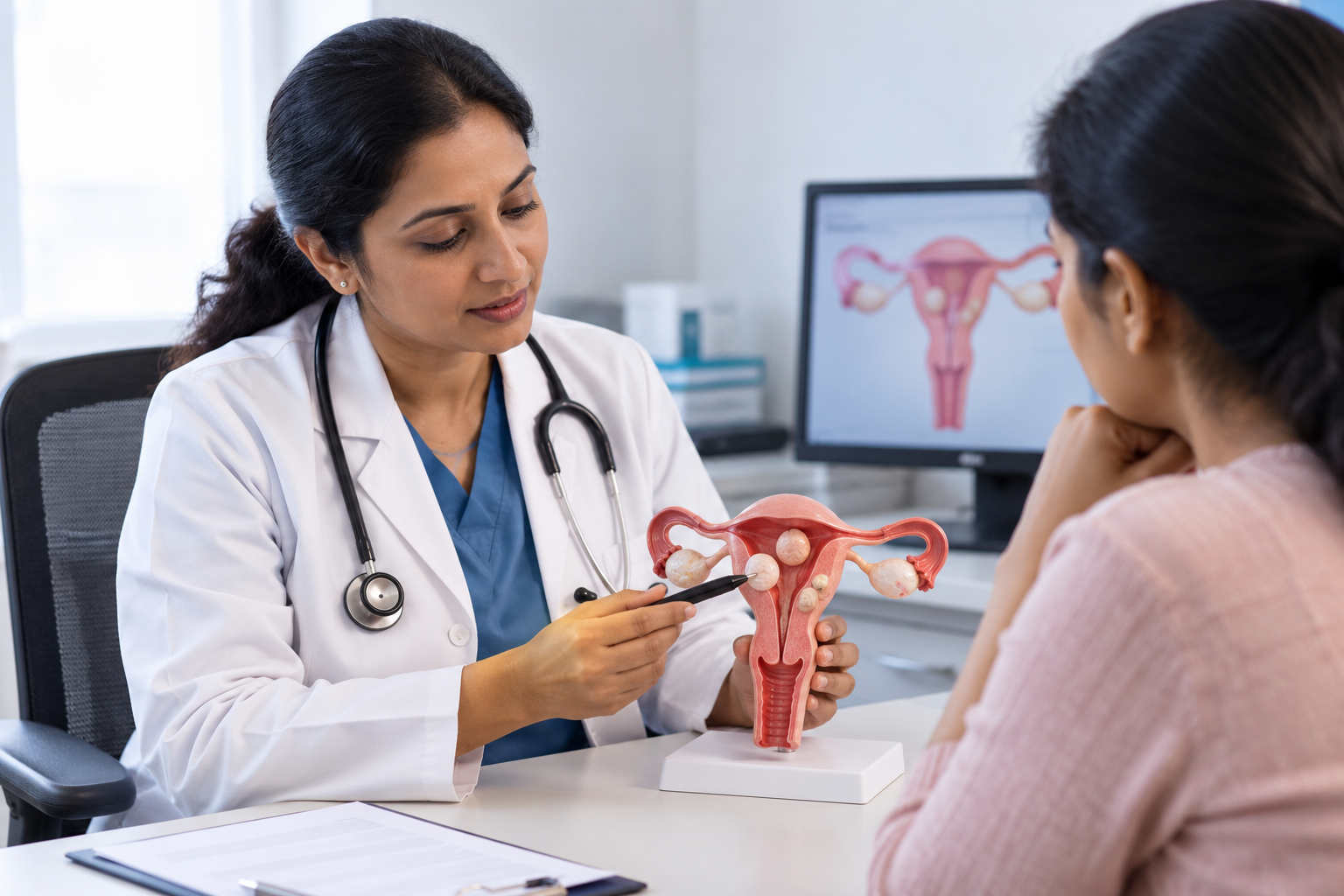
Uterine fibroids are one of the most common gynecological conditions, affecting a large proportion of women at some point before menopause. Yet they remain surrounded by confusion – some women assume every fibroid needs surgery, while others ignore symptoms for years, unaware that fibroids could be the cause.
This blog breaks down what fibroids actually are, the symptoms worth paying attention to, common myths, and when surgery genuinely becomes necessary.
Fibroids can affect women differently at different life stages, and the right approach for a 25-year-old planning a family looks very different from the right approach for a 48-year-old nearing menopause. That’s why understanding the basics, rather than relying on assumptions or advice from friends and family, makes such a difference in how confidently a woman can navigate her own diagnosis.
What Are Uterine Fibroids?
Fibroids are non-cancerous growths that develop in or around the uterus. They can be as small as a seed or grow large enough to change the shape of the uterus. Depending on where they form, fibroids are classified as:
- Intramural – within the muscular wall of the uterus (most common type)
- Submucosal – projecting into the uterine cavity
- Subserosal – growing on the outer surface of the uterus
A woman can have a single fibroid or multiple fibroids of different sizes at the same time.
What Causes Fibroids to Develop?
Doctors haven’t pinpointed one single cause of fibroids, but certain factors are known to raise the likelihood of developing them:
- Hormonal influence – Estrogen and progesterone appear to encourage fibroid growth, which is why fibroids tend to shrink after menopause when hormone levels drop
- Family history – Women with a mother or sister who has had fibroids are more likely to develop them too
- Age – Fibroids become more common as women approach their late 30s and 40s, though younger women aren’t exempt
- Body weight – Higher body weight is associated with a somewhat increased risk
- Diet – Some studies suggest that diets low in fruits and vegetables and high in red meat may play a role, though research is still evolving
None of these factors guarantee a woman will develop fibroids, and many women with no risk factors at all are still diagnosed with them. This is why persistent or unusual symptoms should be discussed with a gynecologist, regardless of your family history or lifestyle.
Common Symptoms
Many fibroids cause no symptoms at all and are discovered incidentally during a routine scan. When symptoms do occur, they typically include:
- Heavy or prolonged menstrual bleeding
- Periods lasting longer than usual
- Pelvic pain or a feeling of pressure/fullness in the lower abdomen
- Frequent urination, caused by fibroids pressing on the bladder
- Constipation or bloating, if fibroids press on the bowel
- Pain during intercourse
- In some cases, difficulty conceiving or complications during pregnancy
The severity of symptoms often depends more on the size and location of the fibroid than on how many are present.
Myths About Fibroids
Myth 1: “All fibroids need surgery.” False. Small, symptom-free fibroids are frequently just monitored with periodic scans. Many women live with fibroids for years without ever needing intervention.
Myth 2: “Fibroids always turn into cancer.” False. The vast majority of fibroids are benign and do not become cancerous. Malignant transformation is extremely rare.
Myth 3: “Fibroids mean you can’t get pregnant.” Not necessarily true. Many women with fibroids conceive and carry pregnancies without complications. Fertility issues are more likely when fibroids distort the uterine cavity, something a doctor can assess through imaging.
Myth 4: “Removing fibroids means removing the uterus.” False. A hysterectomy is only one of several treatment options, and is generally reserved for specific circumstances, not the default treatment for every fibroid.
Myth 5: “Fibroids will just go away on their own.” Sometimes they shrink after menopause due to hormonal changes, but they don’t reliably disappear on their own during the reproductive years.
How Fibroids Are Diagnosed
Diagnosis usually starts with a pelvic examination, followed by imaging such as:
- Ultrasound – the first-line and most common diagnostic tool
- MRI – used for more detailed mapping, especially before surgery
- Hysteroscopy – to directly view fibroids inside the uterine cavity, when needed
When Is Treatment or Surgery Actually Necessary?
Treatment decisions depend on symptoms, fibroid size and location, the woman’s age, and whether she wishes to preserve fertility. Options include:
1. Watchful waiting For small, asymptomatic fibroids, regular monitoring may be all that’s needed.
2. Medication Hormonal treatments can help manage heavy bleeding and pain, particularly for women who aren’t ready for or don’t need surgery.
3. Minimally invasive procedures Options such as uterine fibroid embolization or hysteroscopic removal can address fibroids without major surgery, depending on their size and location.
4. Myomectomy (fibroid removal surgery) Recommended when fibroids are large, causing significant symptoms, or affecting fertility and the woman wishes to retain her uterus. This can often be done laparoscopically.
5. Hysterectomy Considered mainly for women who have completed childbearing and have severe, recurrent symptoms that haven’t responded to other treatments, or in specific medical circumstances.
Surgery is a decision made jointly between the patient and her gynecologist, never a default response to a fibroid diagnosis.
Living With Fibroids: Everyday Tips
For women who are being monitored rather than treated actively, a few everyday habits can help manage symptoms and support overall reproductive health:
- Track your cycle – Note the heaviness and duration of periods so any changes are easy to flag during checkups
- Stay iron-conscious – Heavy bleeding can lead to iron-deficiency anemia over time, so include iron-rich foods or supplements if advised
- Manage weight through diet and movement – Maintain a healthy weight through balanced nutrition and regular physical activity, which can support overall health.
- Follow your recommended checkups – If your doctor recommends monitoring a fibroid, attend the advised examinations or scans to assess any changes in size or symptoms.
- Talk openly with your doctor – Whether you’re planning a pregnancy or nearing menopause, your treatment plan should evolve with your life stage, not stay static
Frequently Asked Questions
Can fibroids come back after surgery?
It’s possible, particularly after a myomectomy, since new fibroids can develop over time. Regular follow-up scans help track this.
Do fibroids affect periods even if they’re small?
Yes, in some cases. Location matters more than size, a small submucosal fibroid can cause heavier bleeding than a much larger subserosal one.
Is there a way to prevent fibroids?
There’s no guaranteed prevention method, but maintaining a healthy weight, eating a balanced diet, and attending regular gynecological checkups can support overall uterine health.
At what age should I start worrying about fibroids?
There is no specific age at which you need to start worrying about fibroids. They can develop during the reproductive years, so unusual bleeding, pelvic pressure, pain or other persistent symptoms should be discussed with a gynecologist.
When Should You See a Gynecologist?
Consider getting evaluated if you experience:
- Periods that are unusually heavy or last longer than a week
- Persistent pelvic pain or pressure
- Bloating or a feeling of abdominal fullness that doesn’t resolve
- Difficulty conceiving after several months of trying
Early evaluation can help identify the cause of your symptoms and give you time to discuss appropriate treatment options, including fertility-preserving approaches when appropriate.
At NIMS Micro Hospitals, Trivandrum, our Gynecology department offers ultrasound-based diagnosis, personalised treatment planning, and both minimally invasive and surgical options for fibroid management.
Why Choose NIMS Micro Hospitals for Fibroid Care
Getting the right diagnosis is only half the journey – the other half is having a team that explains your options clearly and supports the decision that’s right for you, not just the fastest one. Our Gynecological Treatment in Trivandrum is built around exactly that approach: thorough diagnostic imaging, experienced gynecologists who take time to walk patients through every option (from watchful waiting to surgery), and a care team that stays involved through recovery and follow-up. Whether you’re newly diagnosed, seeking a second opinion, or looking for a fertility-preserving surgical option, our specialists are here to guide you through each step with clarity and compassion.
Experiencing symptoms that could be fibroid-related? Speak with our gynecology specialists today. 📞 +91 80784 99444