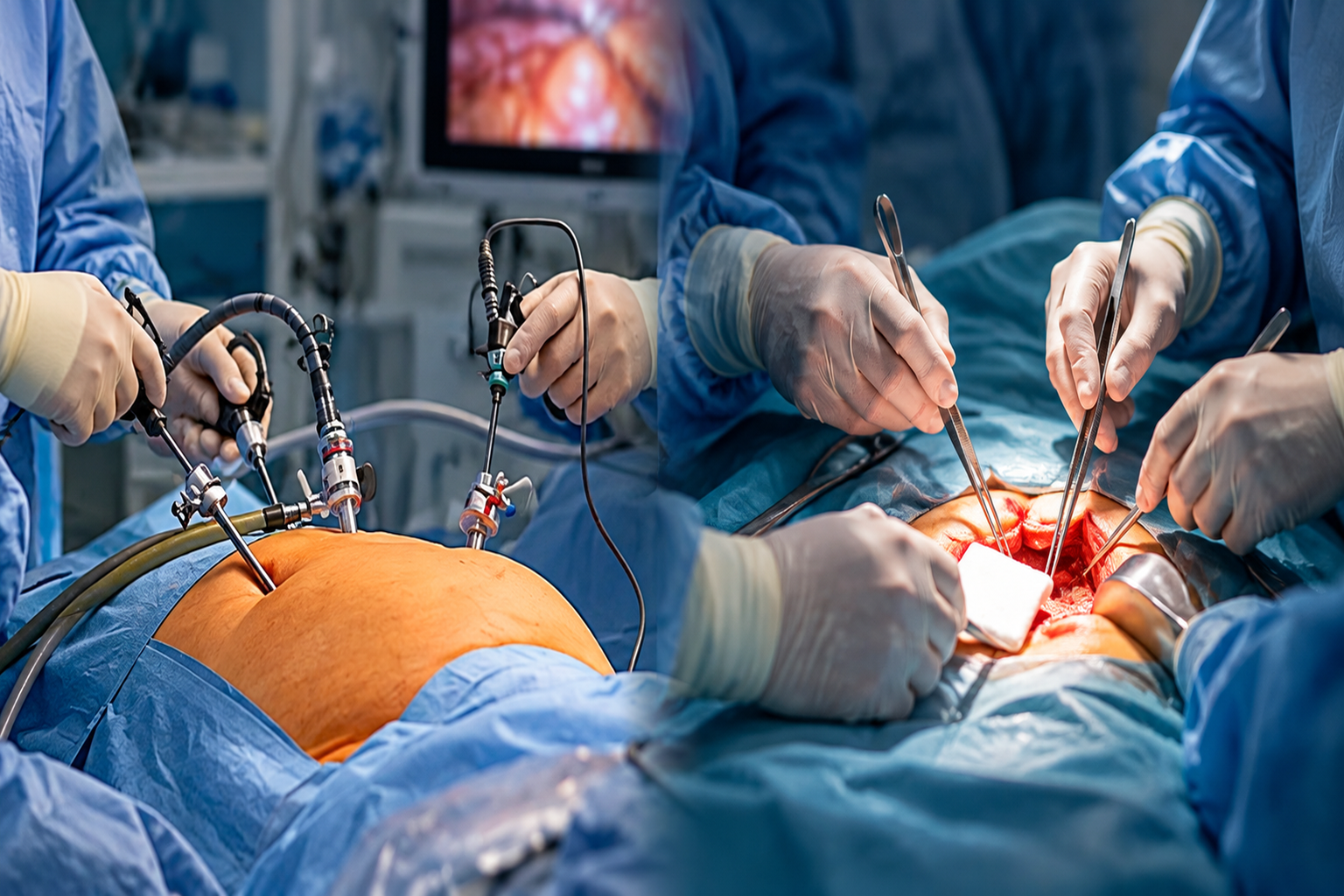
Surgery can be performed using different techniques, with laparoscopic and open procedures being two widely used approaches. Although both methods are used to treat medical conditions through surgery, the way the surgeon reaches the affected area is different.
Knowing how these two methods differ can help patients understand their treatment options and discuss the most appropriate approach with their surgeon.
What Is Laparoscopic Surgery?
Laparoscopic surgery is a minimally invasive method in which surgeons operate through small openings using a camera and specialised instruments. The camera provides a magnified view of the surgical area, allowing the surgeon to work with specialised instruments.
This technique is commonly used in a range of operations involving the abdomen and pelvis, depending on the patient’s condition and the surgeon’s assessment.
The suitability of laparoscopic surgery is determined by factors such as the medical condition, the complexity of the planned operation and the surgeon’s evaluation of the patient’s overall health.
Compared with traditional open procedures, laparoscopic operations usually involve smaller surgical openings. Whether this approach is appropriate, however, depends on the individual case and the procedure being considered.
What Is Open Surgery?
In open surgery, the surgeon creates a larger surgical opening to reach the affected area and carry out the required procedure. This gives the surgical team direct access to the treatment area.
Despite the development of minimally invasive techniques, open surgery continues to be necessary for certain medical conditions and complex operations.
For some patients and procedures, an open approach can provide the access required to perform the operation safely and effectively.
The choice of open surgery doesn’t necessarily mean that a procedure is less advanced. In some cases, direct surgical access may be the most suitable option.
Laparoscopic vs Open Surgery: What Is the Difference?
The two approaches have the same broad goal: to treat the underlying medical problem safely and effectively. The main distinction is the way the surgeon reaches the area requiring treatment.
1. Size of the Incision
One of the clearest differences between these approaches is how the surgeon gains access to the area being treated.
With open surgery, a comparatively larger incision is made to provide direct access to the surgical site.
During a laparoscopic procedure, the surgeon creates small access points in the body and uses a camera along with specialised surgical instruments to carry out the operation.
2. Tissue Disruption and Scarring
Because laparoscopic procedures generally involve smaller openings, they may cause less disruption to nearby tissues and usually result in smaller scars.
The appearance of surgical scars can differ between patients depending on the operation performed and the body’s natural healing process.
3. Post-Surgical Discomfort
The amount of discomfort following surgery can vary depending on the procedure and the individual patient’s recovery.
Postoperative discomfort is influenced by several factors, including the nature of the operation, the tissues involved, individual pain tolerance and the body’s healing response.
Laparoscopic surgery may result in less postoperative discomfort for some procedures because the access points are smaller, but this isn’t guaranteed for every patient or operation.
4. Recovery Time
Minimally invasive procedures may allow some patients to resume normal activities sooner, although recovery depends greatly on the individual operation.
The healing period can be influenced by the complexity of the procedure, the patient’s general health and whether any complications occur.
Is Laparoscopic Surgery Always Better?
Not necessarily.
Laparoscopic surgery isn’t automatically the right choice for everyone. The appropriate method is determined after considering the medical condition, the procedure required, previous operations, overall health and other factors assessed by the surgical team.
Some conditions may respond more appropriately to an open procedure, particularly when the surgeon requires wider access to the affected area.
Before suggesting a particular technique, the surgical team weighs the expected benefits, possible limitations and safety considerations associated with each option.
The final decision should therefore be based on the patient’s individual medical needs rather than simply choosing the procedure with the smallest incision.
Benefits of Keyhole Surgery
For patients who are suitable candidates, minimally invasive surgery can offer certain advantages.
These may include:
- Smaller surgical openings
- Less disruption to surrounding tissues
- Smaller visible scars
- Reduced postoperative discomfort in some types of procedures
- The possibility of getting out of bed and moving around sooner when medically appropriate
- A shorter hospital stay in certain operations
- A quicker return to everyday routines for some patients
The expected benefits aren’t identical for every operation. They depend on the procedure being performed, the patient’s health and how the individual responds during recovery.
Factors That Influence the Choice of Surgical Technique
The choice between laparoscopic and open surgery is made after the surgeon evaluates the patient’s condition, the procedure required and any factors that could affect surgical safety.
The surgeon may consider:
- The type of medical condition
- The precise area involved and the extent of the problem
- Complexity of the operation
- Previous abdominal or pelvic surgeries
- Existing medical conditions
- Overall health and fitness for surgery
- Possible complications
- Whether minimally invasive access is technically suitable
- The surgeon’s experience with the procedure
In some situations, a laparoscopic procedure may need to be changed to an open operation during surgery if this is considered necessary for patient safety.
The final decision should therefore be based on medical suitability rather than simply choosing the method with the smallest incision.
Recovery After Laparoscopic and Open Surgery
The recovery period isn’t determined by the surgical approach alone.
The recovery process can vary based on the operation performed, the amount of treatment required, the patient’s overall condition and their individual healing response.
Some patients undergoing laparoscopic surgery may return to routine activities relatively quickly, while others may require more time depending on the procedure performed.
Patients recover at different rates, so the expected healing timeline can vary even among people who undergo similar procedures.
Open surgery can involve a longer healing period in certain cases because of the larger incision and greater disruption to the tissues. However, recovery differs according to the procedure and individual circumstances.
Following the surgeon’s instructions after the operation is important. This may include guidance about wound care, physical activity, medication, diet and follow-up appointments.
When May Open Surgery Be Recommended?
Open surgery may be considered when the surgeon needs wider access to the treatment area or when a minimally invasive approach isn’t appropriate.
It can be used for certain complex operations, emergencies and conditions where direct access is considered necessary.
The decision isn’t based only on the size of the incision. The surgeon must consider the patient’s safety, the nature of the condition and the expected outcome of the procedure.
When May Laparoscopic Surgery Be Considered?
Laparoscopic surgery may be considered for suitable patients when the condition can be safely treated through minimally invasive access.
It has become an important surgical option for various abdominal and pelvic procedures. However, not every patient is a candidate for laparoscopic treatment.
A detailed medical evaluation helps the surgical team determine whether keyhole surgery is appropriate.
Advanced Keyhole Surgery Care in Trivandum
At NIMS Micro Hospitals, patients can receive surgical evaluation and treatment based on their individual medical requirements. The surgical team assesses each case carefully before deciding whether laparoscopic or open surgery is more appropriate.
The hospital provides Advanced Keyhole Surgery Care in Trivandum, with attention to appropriate surgical planning, patient safety and postoperative care.
Patients can discuss their symptoms, diagnosis and treatment options with the surgical team to understand which approach may be suitable for their condition.
Which Surgery Is Right for You?
There isn’t one surgical method that is best for every patient.
Laparoscopic surgery can provide the benefits of minimally invasive access for suitable procedures, while open surgery remains an important option when wider surgical access is required.
The most appropriate approach depends on the patient’s condition, the complexity of the procedure, overall health and the surgeon’s professional assessment.
Patients should discuss the available options with their surgeon rather than choosing a procedure based only on scar size or expected recovery time.
Final Thoughts
Laparoscopic and open surgery are both valuable approaches used in modern surgical care. Laparoscopic procedures use smaller access points and may provide certain recovery advantages for appropriate patients, while open surgery remains an important option when greater surgical access is needed.
The priority should always be achieving the safest and most suitable treatment outcome. The size of the incision alone shouldn’t determine which surgical method is selected.
A discussion with a qualified surgeon can help patients understand the available options, expected recovery and factors that influence the choice of surgical technique.