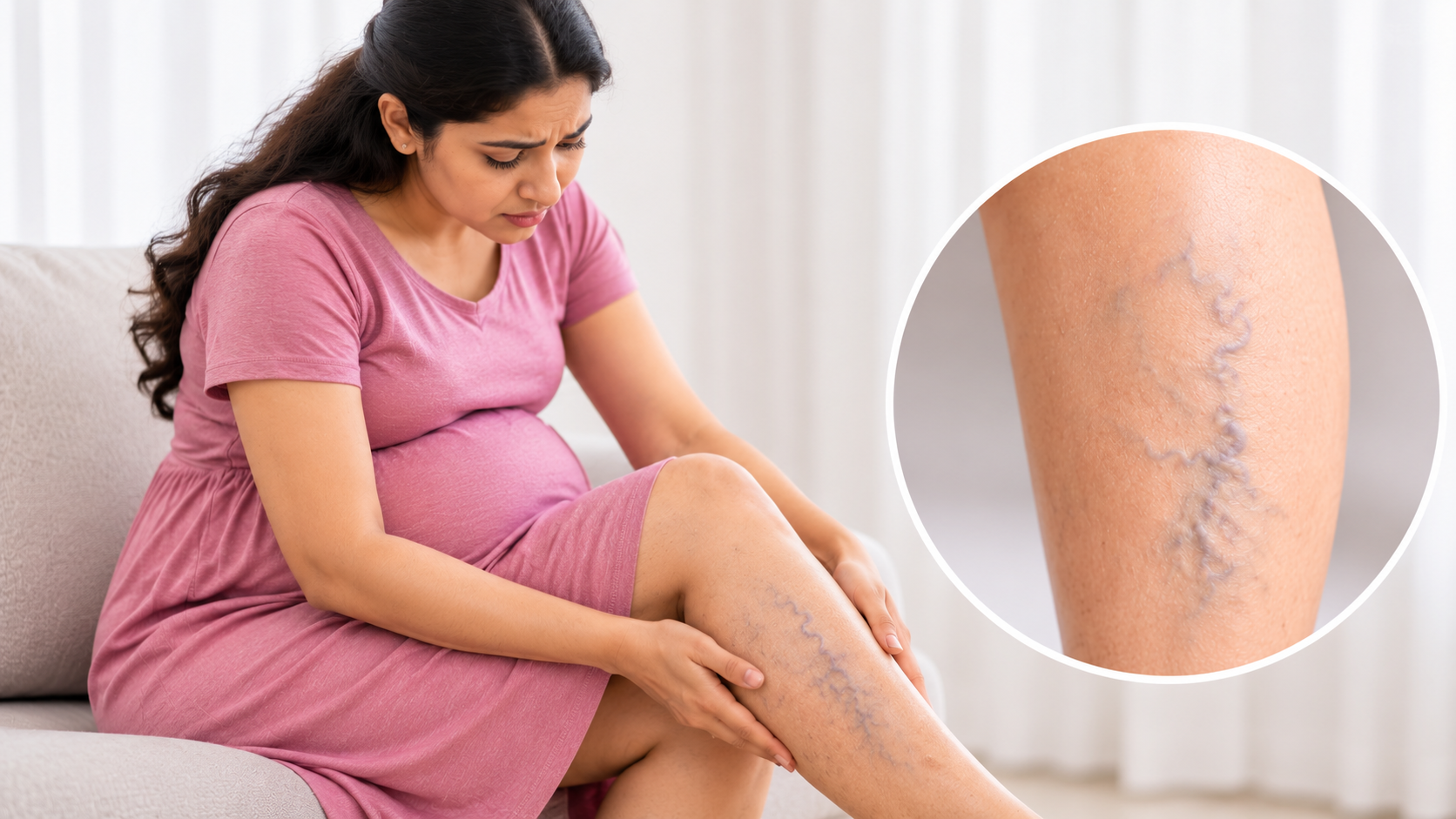
Varicose veins are a common concern during pregnancy. Many women notice enlarged, twisted or bluish veins appearing on their legs as their pregnancy progresses. These veins may cause heaviness, aching, itching and swelling, particularly after standing or sitting for long periods.
Pregnancy brings several changes to the body, including increased blood volume, hormonal fluctuations and pressure on the veins in the pelvic region. These changes can affect normal blood circulation and contribute to the development of varicose veins.
Although varicose veins are usually not dangerous, they can cause discomfort and sometimes lead to complications. Understanding why they develop, recognising their symptoms and knowing how to manage them can help expectant mothers take better care of their vein health.
What Are Varicose Veins?
Varicose veins are enlarged and twisted veins that develop when the valves responsible for maintaining normal blood flow become weak or stop functioning properly. Normally, these valves prevent blood from flowing backwards as it travels towards the heart.
When the valves do not work effectively, blood can collect inside the veins. This increases pressure and causes the veins to become enlarged and visible beneath the skin.
Varicose veins commonly appear on the legs because these veins work against gravity to return blood towards the heart. During pregnancy, they may also develop around the pelvic region, vulva and rectal area.
Why Do Varicose Veins Develop During Pregnancy?
Several physical and hormonal changes during pregnancy can increase the likelihood of developing varicose veins.
1. Increased Blood Volume
During pregnancy, the body produces more blood to support the growing baby and the mother’s changing needs. These changes can affect how blood flows through the veins and may contribute to increased venous pressure.
2. Hormonal Changes
Pregnancy hormones, particularly progesterone, relax the walls of blood vessels. This can make the veins more prone to enlargement and affect the efficiency of the valves that regulate blood flow.
3. Pressure from the Growing Uterus
As the baby grows, the uterus becomes larger and can put pressure on the major veins that carry blood from the lower body towards the heart. This can make it more difficult for blood to flow upwards, increasing the chances of blood collecting in the lower leg veins.
4. Previous Pregnancy
Women who have experienced varicose veins during an earlier pregnancy may have a greater chance of developing them again. The risk can also increase with multiple pregnancies because the veins experience repeated changes in pressure and circulation.
5. Family History
Genetics can influence vein strength and valve function. Women with a family history of varicose veins may be more likely to experience the condition during pregnancy.
Common Symptoms of Varicose Veins During Pregnancy
The symptoms can differ from one woman to another. Some may notice only visible veins, while others experience discomfort that affects their daily routine.
Common symptoms include:
- Enlarged, twisted or bluish veins visible beneath the skin.
- Aching or throbbing sensations in the legs.
- A feeling of heaviness, especially towards the end of the day.
- Swelling around the ankles and lower legs.
- Itching or irritation around the affected veins.
- Leg cramps, particularly at night.
- Discomfort after standing or sitting for extended periods.
Symptoms may become more noticeable as pregnancy progresses. If one leg suddenly becomes swollen, painful, red or warm, seek urgent medical assessment because these symptoms can indicate a blood clot rather than ordinary varicose veins.
How Are Varicose Veins Diagnosed During Pregnancy?
A doctor can often identify varicose veins through a physical examination and a discussion of the symptoms. They may ask when the veins first appeared, whether there is pain or swelling and whether similar problems occurred during previous pregnancies.
If there are concerns about blood circulation or possible complications, a venous Doppler ultrasound may be recommended. This painless imaging test helps examine blood flow through the veins and identify problems such as blood clots or abnormal circulation.
Not every pregnant woman with visible varicose veins needs an ultrasound. The doctor will decide whether further investigation is necessary based on the symptoms and examination findings.
Treatment Options for Varicose Veins During Pregnancy
Treatment during pregnancy generally focuses on relieving discomfort and supporting healthy blood circulation. Most procedures for closing or removing varicose veins are postponed until after childbirth.
The following measures may help manage symptoms:
1. Wearing Compression Stockings
Medical-grade compression stockings apply gentle pressure to the legs, helping blood move towards the heart and reducing swelling. A doctor can recommend the appropriate type and size based on the patient’s condition.
They are generally worn during the day and removed before sleeping, unless a healthcare professional advises otherwise.
2. Staying Physically Active
Gentle physical activity, such as walking, can support blood circulation in the legs. Movement activates the calf muscles, which help push blood towards the heart.
Pregnant women should follow their obstetrician’s advice about suitable activities and exercise levels.
3. Avoiding Prolonged Standing or Sitting
Remaining in one position for extended periods can increase pressure in the leg veins. Taking short movement breaks, changing positions regularly and avoiding long periods of standing may help reduce discomfort.
4. Elevating the Legs
Resting with the legs slightly raised can help reduce fluid accumulation and relieve swelling. This can be particularly useful after spending time standing or walking.
5. Sleeping in a Comfortable Position
Sleeping on the left side may help reduce pressure on major blood vessels and support circulation during pregnancy. Pregnant women can discuss comfortable sleeping positions with their healthcare provider.
These measures may help manage symptoms, but they do not necessarily eliminate existing varicose veins.
Can Varicose Veins Be Treated During Pregnancy?
In most cases, invasive procedures are not recommended during pregnancy. Treatments such as laser ablation, Radiofrequency Ablation (RFA) and sclerotherapy are generally postponed until after delivery.
The main reason is that pregnancy-related changes in blood volume, hormones and pressure can continue to affect the veins. Treating the veins during this period may not provide a lasting result.
Doctors usually recommend conservative management to control discomfort and monitor the condition. If symptoms are severe or complications develop, a specialist may assess whether additional medical care is needed.
The timing of any procedure after childbirth depends on the patient’s recovery, symptoms and vein condition. Some pregnancy-related varicose veins become smaller or disappear without requiring further treatment.
Do Varicose Veins Disappear After Delivery?
Many women notice an improvement in varicose veins after giving birth. Once pregnancy-related pressure on the pelvic veins decreases and hormone levels gradually return towards their usual levels, blood circulation may improve.
The appearance and discomfort associated with the veins can reduce over the following months. However, some women continue to experience enlarged veins, leg heaviness or swelling even after childbirth.
If the symptoms remain, a specialist can evaluate the veins and discuss suitable treatment options. A venous Doppler ultrasound may help determine whether faulty valves or abnormal blood flow are contributing to the problem.
Women who continue to experience discomfort after pregnancy should not assume that the condition will disappear on its own. A medical assessment can help determine whether further treatment is necessary.
When Should You Seek Medical Attention?
Although varicose veins are common during pregnancy, certain symptoms require prompt medical evaluation.
Consult a healthcare professional if you notice:
- Increasing pain or discomfort in the legs.
- Persistent swelling around the ankles or calves.
- Skin irritation, itching or colour changes around the veins.
- A vein that becomes hard, red or painful to touch.
- Bleeding from an enlarged vein.
- Open wounds or sores around the affected area.
Seek urgent medical attention if one leg suddenly becomes swollen, painful, red or warm. These symptoms can indicate deep vein thrombosis (DVT), a blood clot in a deep vein. Sudden breathlessness, chest pain, coughing up blood or fainting may indicate a pulmonary embolism and require emergency care. Do not wait for these symptoms to settle on their own.
Can Varicose Veins Be Prevented During Pregnancy?
It may not always be possible to prevent varicose veins because some contributing factors, such as hormonal changes and family history, cannot be controlled. Still, certain everyday habits may help support circulation and reduce discomfort.
- Take short walks regularly, if approved by your healthcare provider.
- Avoid sitting or standing in one position for too long.
- Elevate your legs when resting.
- Wear comfortable clothing that does not tightly restrict the waist or legs.
- Follow medical advice about compression stockings.
- Maintain a balanced diet and drink enough water.
- Attend regular antenatal appointments and discuss any new symptoms.
These habits can support general circulation and help manage discomfort, but they cannot guarantee that varicose veins will not develop.
Varicose Vein Care in Trivandrum at NIMS Micro Hospitals
Varicose veins during pregnancy may cause discomfort, but appropriate medical guidance can help expectant mothers manage the condition safely. Persistent symptoms after childbirth may also require specialist evaluation to understand the available treatment options.
If you are looking for Varicose Vein Care in Trivandrum, NIMS Micro Hospitals offers medical evaluation and treatment guidance for varicose vein-related concerns. Contact NIMS Micro Hospitals to consult a specialist and discuss suitable care based on your condition.